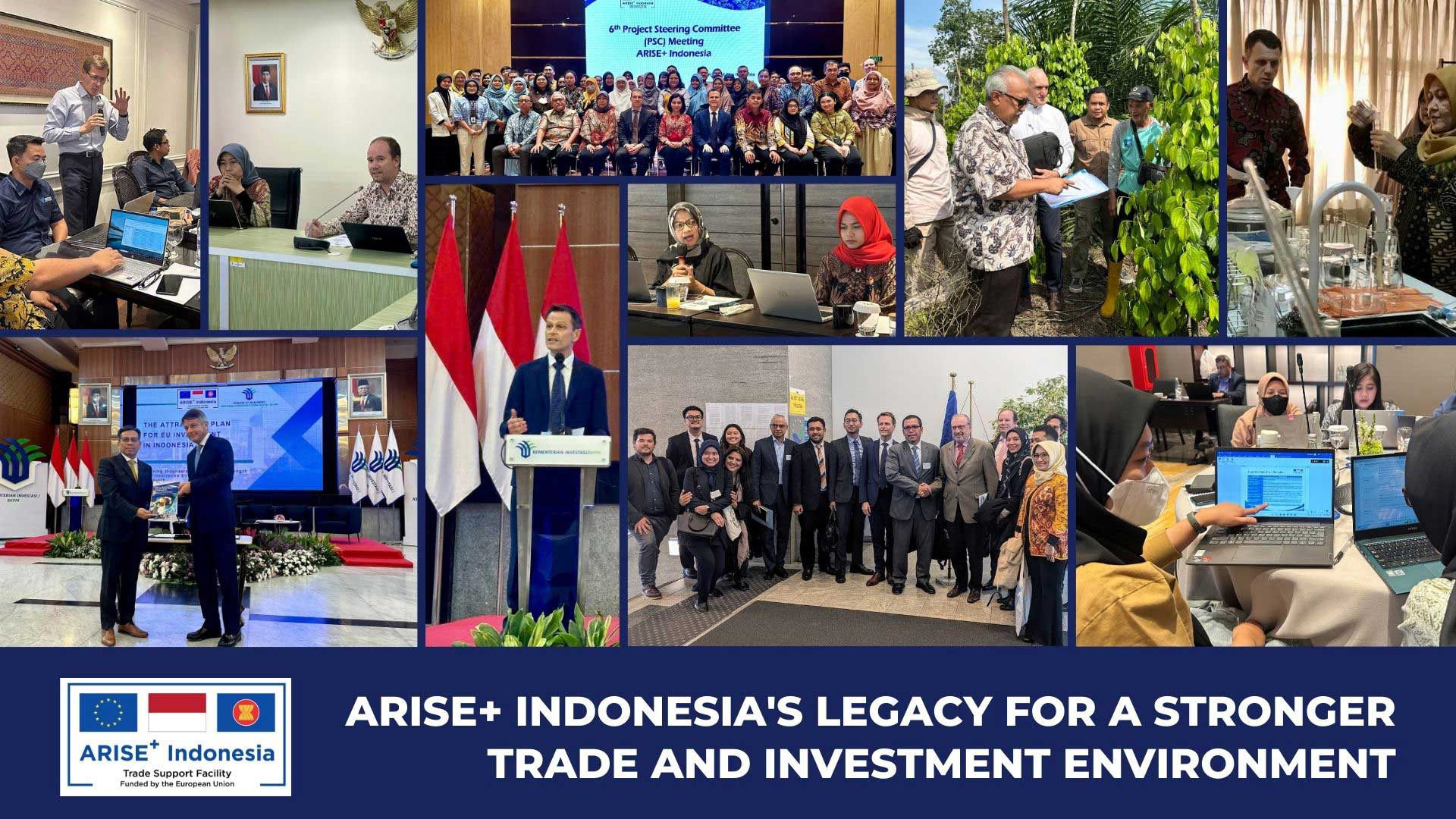
The successful development of a groundbreaking Case Management System (CMS) by ARISE+ Indonesia, in collaboration with Koltiva, serves as a significant milestone for trade investigations. This innovative tool, designed to support the Ministry of Trade in streamlining and effectively managing the trade investigation process, is a trailblazer as Southeast Asia's first trade remedy investigation system.
A senior delegation from Indonesia’s Ministry of Investment and Ministry of National Development Planning are conducting a two-week study- and contact-building visit around Europe, arranged by ARISE+ Indonesia, to visit and meet with world-leading institutions and ecosystems for investment.
On 4 May 2023, a team of export quality infrastructure experts from ARISE+ Indonesia embarked on a field visit to undertake a pre-assessment study of the Mollusca Bivalve production ecosystem in Tanjung Balai, Asahan, North Sumatra. This pre-assessment mission aimed to build effective communication channels with local representatives and government offices, evaluate production farms for density and size, understand the challenges and needs, define the scope of a capacity-building program, and ascertain the conditions' suitability for delivering training and assistance.
Indonesia is setting its sights on harnessing the transformative power of Free Trade Agreements (FTAs) and Comprehensive Economic Partnership Agreements (CEPAs) to drive sustainable economic growth, boost competitiveness, and spur innovation across a multitude of industries. The key to unlocking their potential, however, lies in their maximal usage by the country's businesses, particularly its micro, small, and medium enterprises (MSMEs).
Investment is a crucial element for promoting economic growth and international economic integration. With the right policy framework, investment can enhance financial stability, promote technological adoption, and improve people's welfare.
Indonesia is currently the fourth-largest economy in Southeast Asia and has set its sights on becoming one of the top five economies in the world by 2045. To achieve this vision, the Indonesian government has identified strategic policies, including strengthening international economic cooperation. In this regard, the government should focus on four key areas: expanding market access and attracting more investment, improving domestic economic competitiveness, supporting sustainable development, and strengthening institutional strategy and coordination.
A study on Export Acceleration conducted by Bappenas and the the Center for Economic and Development Studies (CEDS) with support from ARISE+ Indonesia found that the contribution of Indonesia's exports to Gross Domestic Product (GDP) has been declining over the past two decades.
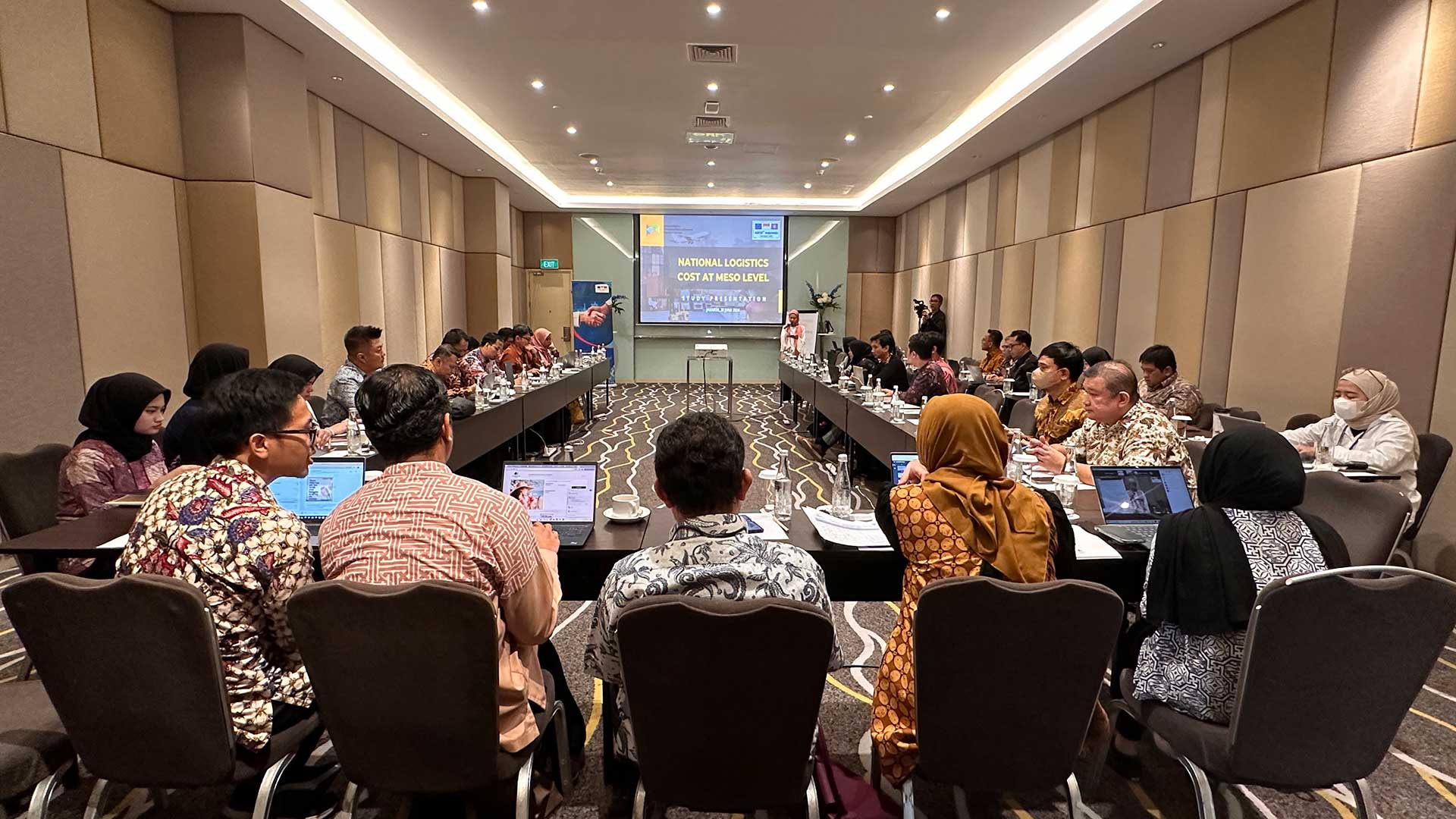
An alternative methodology to calculate actual logistics costs was introduced during a recent study on logistics costs conducted by the Ministry of National Development Planning/Bappenas together with Samudera Indonesia Research Initiatives, with support from ARISE+ Indonesia. The study estimated the logistics costs at the micro and mezzo levels by analysing the cost structure, the types of commodities and the transportation used. The study aimed to support Bappenas in developing a more effective policy to reduce Indonesia's logistics costs.
On 15 March 2023, the first ARISE+ Indonesia Technical Assistance (TA) convened a Wrap-Up Meeting for Priority Area 3, focusing on Export Quality Infrastructure (EQI). The purpose of the meeting was to present a comprehensive overview of activities undertaken and accomplishments achieved during the program's implementation phase spanning from February 2019 to May 2023.
The Jembrana Regency, located in the southwestern part of Bali, is known internationally for the high quality of its cacao. Jembrana cacao owes its reputation to a good selection of plant varieties combined with favourable geographical conditions. On top of those, Jembrana farmers apply subak abian, a Balinese indigenous know-how passed on from many generations to manage water for farming. Based on subak abian principles, for example, by adapting the landscape and growing other plants in cacao fields, farmers can optimise water usage, save on the cost of inputs, sustain the natural characteristics of the soil, and obtain a unique flavour and aroma profile.