Technical Asisstance II
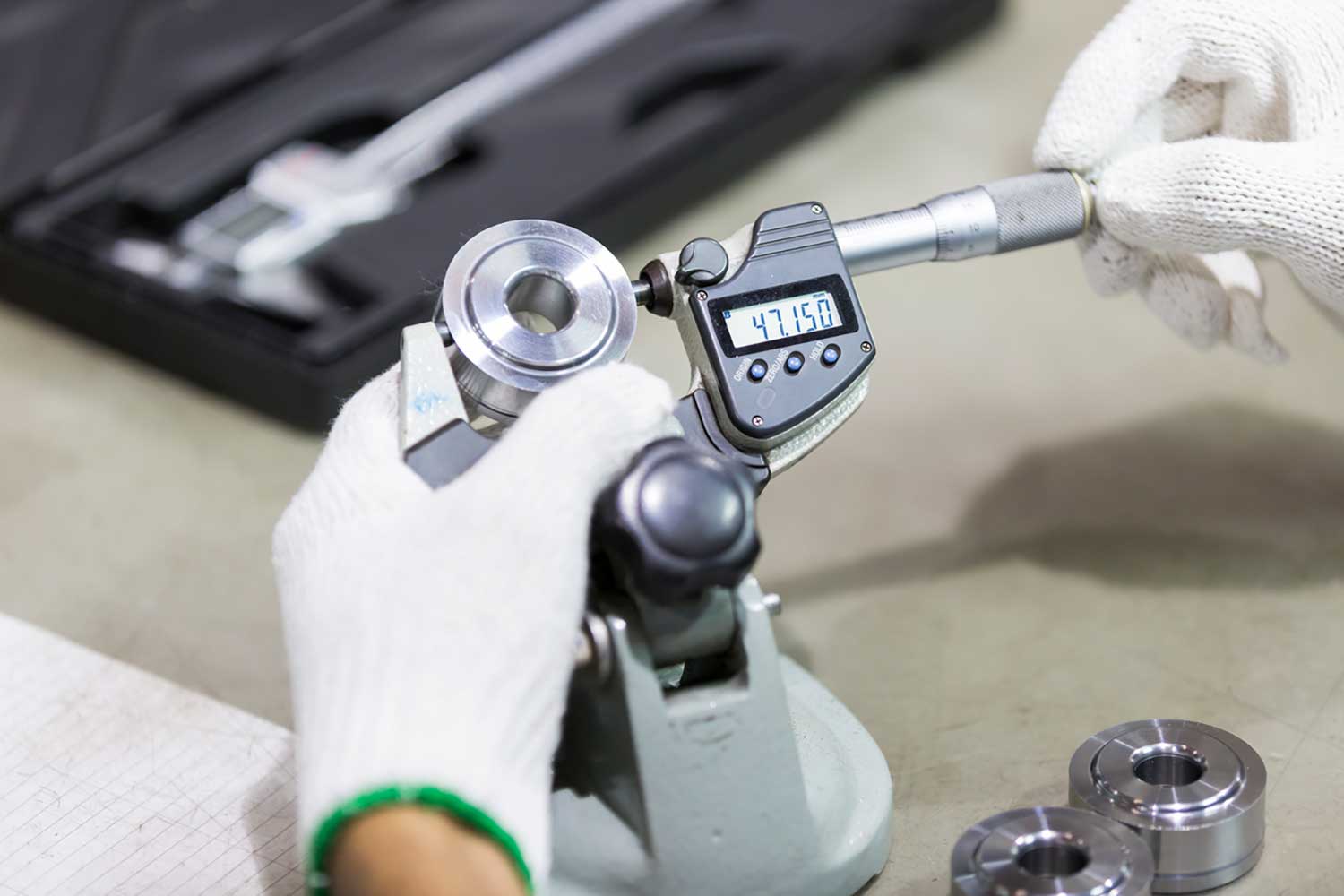
The expansion of Small and Medium-sized Enterprises (SMEs) in Indonesia, combined with technological advancements, has led to a growing and diverse demand for calibration services. This emerging trend offers a lucrative opportunity for the expansion and diversification of calibration laboratories in the country.
The recent survey on SMEs' Calibration Needs revealed that 85% of respondents necessitate calibration services. It indicates that the majority of of SMEs understand that calibration -the process of ensuring the accuracy and consistency of measuring instruments used in production of goods and services-is more than a technical necessity. It is about building customer trust, reducing production errors, and enhancing operational efficiency.
Although the current demand primarily focuses on mass and dimensional equipment, SMEs have varied calibration requirements including mass, length, force, optical, frequency, electrical, volumetric, flow, and pressure. Additionally, these businesses require more than just basic parameter monitoring; they also seek comprehensive analysis, customised measurements, and other specialised services.
Given these evolving needs, it is imperative for calibration laboratories to enhance their capabilities to cater to this diverse array of services. This adaptation is essential to effectively meet the specific demands of the SME sector effectively, ensuring that laboratories remain relevant and competitive in this expanding market.
The research also underscored SMEs' preference in selecting a calibration company. SMEs often prioritize proximity, preferring laboratories that are nearby and equipped with the requisite calibration tools and services. In addition to location, SMEs look for service providers offering a high-quality service, competitive pricing, timely responsiveness, solid reputation, and adherence to industry standards. By thoroughly evaluating these aspects, SMEs can ensure that the calibration services they choose not only meet their technical needs but also contribute positively to their company’s financial and operational health. Service providers that successfully meet these criteria stand to forge strong, enduring relationships with SMEs, playing a pivotal role in the growth and sustainability of these businesses.
The study also brought attention to the challenges SMEs face in adopting calibration services. These challenges include a lack of understanding about the benefits and procedures of calibration, funding constraints for carrying out calibration, a lack of information about calibration laboratories, and production time limitations that make it challenging for businesses to allocate the necessary time for the calibration process.
The SMEs' Calibration Needs Survey was conducted by the National Standardization Unit (SNSU), National Standardization Agency (BSN), in partnership with Mutuagung Lestari International, and supervised by ARISE+ Indonesia. This initiative is a part of ARISE+ Indonesia's support in strengthening BSN's capacity in metrology. This collaboration aims to contribute to the enhancement of Indonesia's Export Quality Infrastructure (EQI) and National Quality Assurance (NQA) frameworks.
The survey was carried out online between October and December 2023. Before its full rollout, a preliminary pilot test with a select group of respondents was conducted. Feedback from this test was used to refine the survey instruments, addressing any issues or ambiguities, prior to its full implementation.
The survey aimed to fulfil multiple objectives: determining SMEs' needs for calibration services; assessing SMEs' awareness of calibration importance; evaluating the adoption rate and integration of calibration practices in SMEs' operations; and identifying the challenges SMEs face regarding calibration services.
The findings of this survey are anticipated to offer dual benefits. For calibration institutions, the insights will be crucial in tailoring their services to meet SME needs more effectively. Simultaneously, for BSN-SNSU, the findings will be valuable in developing more targeted policies, training programs, and evidence-based solutions. These efforts aim to empower SMEs in overcoming calibration-related challenges and enhancing their quality management capabilities.
A total of 114 SMEs from diverse sectors participated in the survey, encompassing a wide range of industries. These included wood processing, manufacturing, health and pharmacy, palm oil, transportation and logistics, food and beverage, retail and trade, mining and energy, construction, consultancy services, energy and commodities, security and technology, fisheries and aquaculture, and automotive.
The report concluded with a comprehensive set of recommendations to improve calibration practices among SMEs. These recommendations include implementing education and training programs to enhance SMEs' understanding of calibration's importance, providing funding facilitation through incentives and loans to address financial challenges, strengthening collaborative networks for knowledge sharing, creating a centralised information system for easy access to calibration resources, advocating for clear regulatory support and compliance standards, developing a joint service center for cost-effective calibration access, and providing digital calibration services for efficient online management and reporting.
Deputy Chairman for BSN-SNSU, Y. Kristianto Widiwardono, expressed gratitude, saying, "We thank ARISE+ Indonesia for facilitating two pivotal calibration surveys. The insights from these studies have provided us with comprehensive overview of the calibration service landscape in Indonesia, encompassing both supply and demand aspects. This valuable data will assist us in formulating targeted strategies and policies to support both calibration institutions and SMEs, enhancing our EQI and NQA significantly."
###