Technical Assistance II
Encouraging research and development (R&D) of local materials and investment in the upstream cosmetics industry, especially the raw materials, is urgently needed to support Indonesian cosmetics small and medium manufacturers. According to the Ministry of Industry’s data, 70%-80% of cosmetics raw materials are still imported. Thus, the development of the upstream industry is expected to reduce dependence on imported raw materials, increase the competitiveness of the Indonesian cosmetics industry, and increase the participation of Micro, Small and Medium Enterprises (MSMEs) in the Global Value Chains through exports of Indonesian cosmetic raw materials.
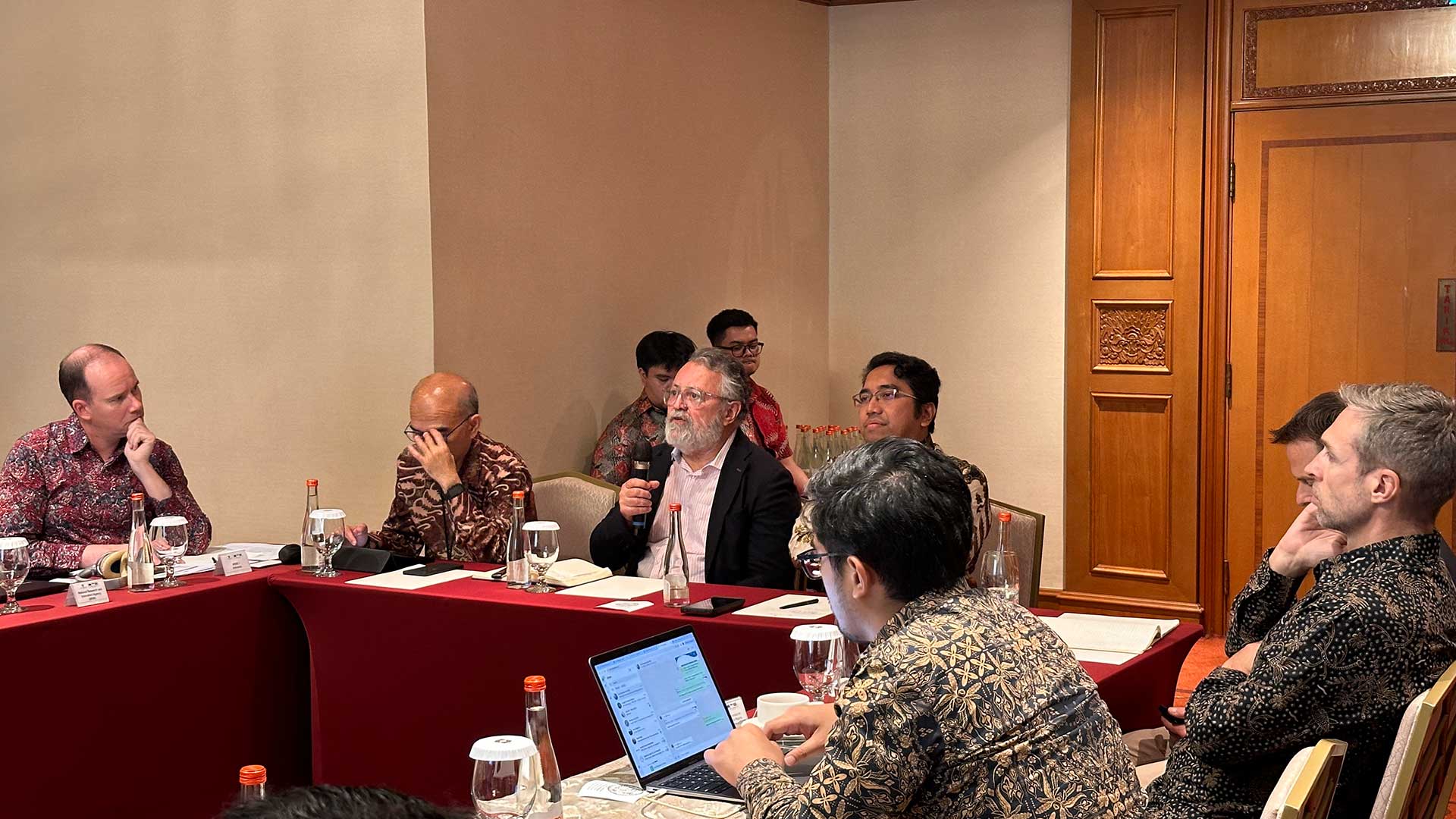
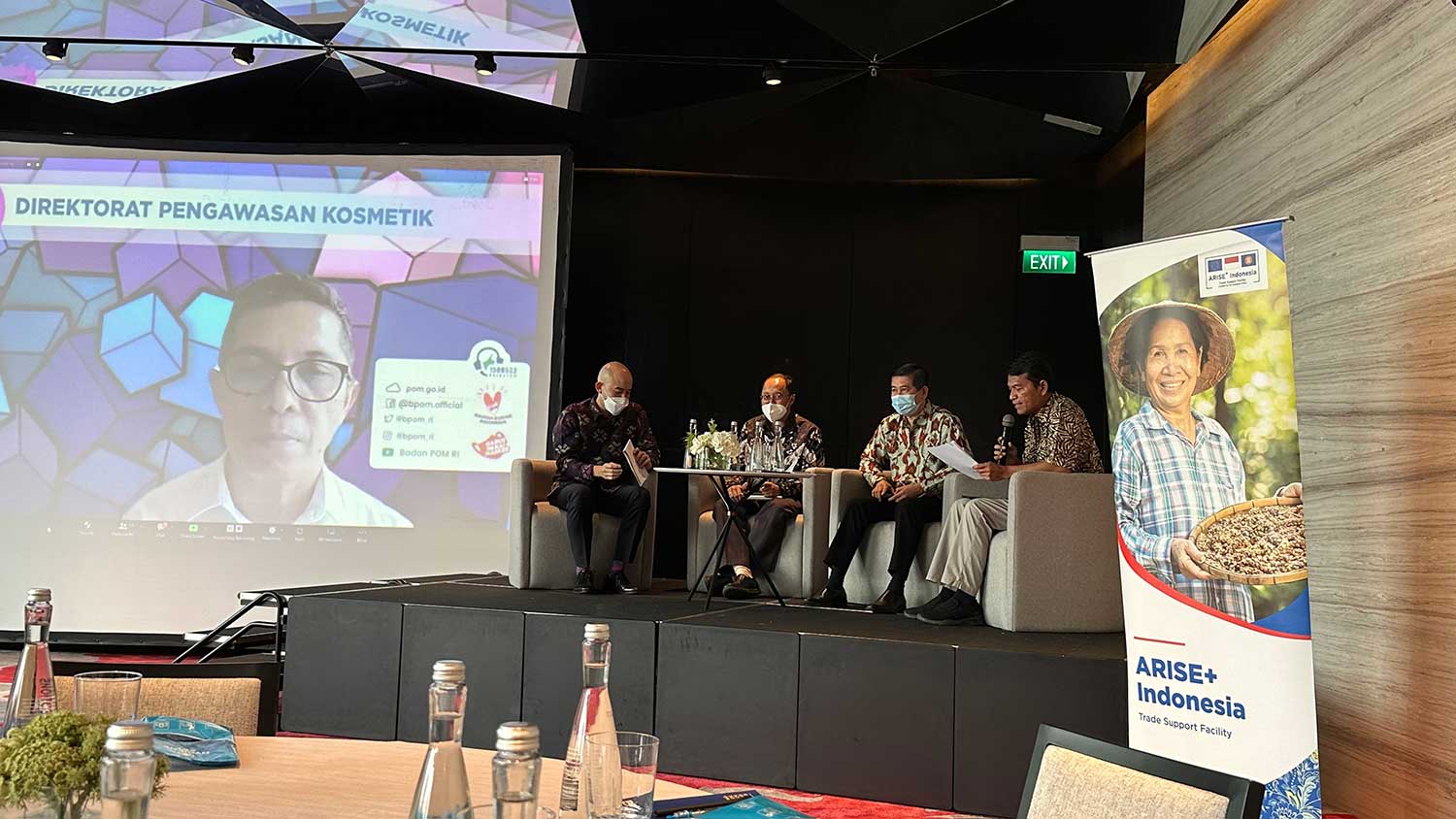
The recommendations were proposed by the Indonesian cosmetics associations PERKOSMI and PPAK Indonesia during the Focus Group Discussion entitled "Demystifying Global Value Chains in Indonesia's Cosmetics Sector" in Jakarta, organised by the Directorate of MSMEs and Cooperative Development at Bappenas, with support from ARISE+ Indonesia, on Tuesday (08/11).
In his opening speech, the Director of MSMEs and Cooperative at Bappenas, Mr Ahmad Dading Gunadi, highlighted the benefits of participation in the Global Value Chains (GVCs). According to Mr Dading, the FGD aimed to sharpen policies and strengthen the involvement of the Indonesian cosmetics industry in the GVCs.
"The Indonesian Government is committed to supporting and strengthening MSMEs in the cosmetics sector to improve participation in the GVCs as this is in line with one of the policy directions and strategies of the 2020-2024 RPJMN," Mr Dading said.
Team Leader of ARISE+ Indonesia Technical Assistance II, Mr Alessandro Martinatto, said that the discussion was timely since the regional and global value chains saw substantial disruptions due to geopolitical events and the COVID-19 pandemic that severely impacted the MSMEs.
"ARISE+ Indonesia is pleased to support this dialogue between the Indonesian Government and the private sector to formulate effective policies and support to encourage the participation of national industries in the GVC," Mr. Martinatto said.
Speaking at the FGD, Chief Scientific and Regulatory Affairs Officer at L'Oréal Indonesia, Mr Rhadeya Setiawan, said that L'Oréal Indonesia established a multi-stakeholders collaboration model to develop Indonesia's natural ingredients for cosmetics that involved universities, ministries and agencies in scaling up the sustainable production of standardised natural ingredients.
The Head of the Center for Export-Import Policy and Trade Defense, Ministry of Trade, Mr Iskandar Panjaitan, highlighted the value of market demand for cosmetics in 2021 that reached USD 126,1 billion. Potential is abundant in non-traditional markets. However, high import duty rates, Non-Trade Measures (NTMs), and high-quality standards requirements shifting to natural and sustainably-sourced cosmetics are among the challenges Indonesian cosmetics companies face.
The Director of Market Development and Export Information, Ministry of Trade, Mr Marolop Nainggolan, reiterated the Indonesian Government's commitment to supporting export promotion.
However, Ms Lena Prawira, the CEO of a medium-sized cosmetics tolling manufacturer in Jakarta, said that promotion support is also needed for the trade in services offered by the Indonesian cosmetics tolling manufacturers.
The researcher from the Biology Laboratory of the Indonesia University, Ms Astari, said that the university research facility needed Government support to develop more advanced laboratory technology to enhance the development of local cosmetics ingredients.
The discussions, moderated by Mr Muhammad Iqbal, the expert in GVCs strategic partnerships, also featured other prominent speakers and panellists, such as the Vice Chairman of PERKOSMI, Mr Patrick Kalona; the Chairman of PPAK Indonesia, Mr Solihin Sofyan; the Director of Cosmetics Control, the National Agency for Food and Drugs Control (BPOM), Mr Irwan; the Deputy Assistant for Partnerships and Market Expansion, Ministry of Cooperatives and SMEs, Ms Destri Anna Sari; representative of Deputy for Regional Development and Supply Chain, Ministry of Cooperatives and SMEs; representative of the Directorate of Downstream Chemical and Pharmaceutical Industry, Ministry of Industry; representative of the Directorate of Various Industries and Small and Medium Industries of Chemical, Clothing and Crafts, Ministry of Industry; representative of the Training Centre for Human Resources in Export and Trade in Services, Ministry of Trade.